
News Center
01Cambodia has entered a substantive phase
"The project is being advanced in an orderly manner as planned"—this brief notice, for the first time, truly made the industry feel that Huasheng Rubber "going global" is no longer just a blueprint, but a construction site and transport vehicles that can be seen and touched. Although details such as the total investment, factory coordinates, and countdown to completion remain confidential, the frequently circulating site photos have already allowed peers to catch a whiff of the "fume and smoke" of construction.
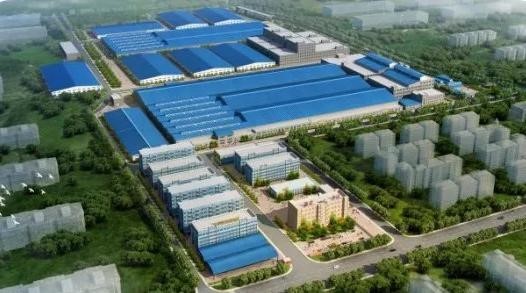
02Why Cambodia?
2.1▍Geography and market "dual-wheel drive"
Southeast Asia's annual growth in passenger car ownership exceeds5%, and Cambodia, as the "largest underdeveloped market in ASEAN," has been seen as an "incremental blue ocean" for both original equipment tires and replacement tire demand. Locating a factory here is equivalent to shrinking the logistics radius into a "one-hour flight circle" from Thailand, Vietnam, and Malaysia, reducing supply chain costs by3%—5%.
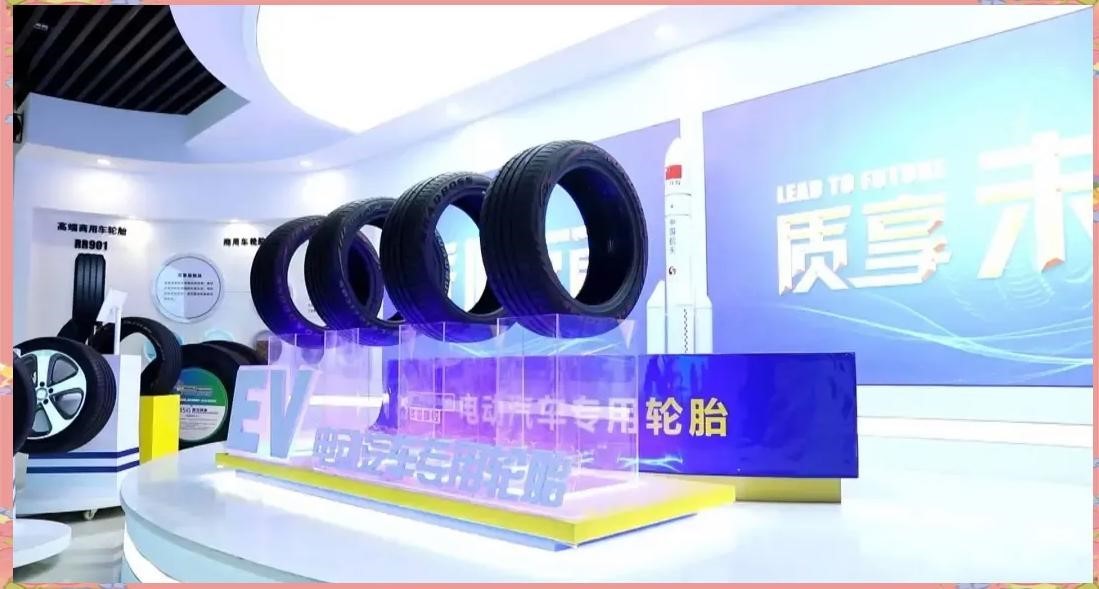
2.2▍A "friendly window" in trade policy
RCEPhas taken effect, and Cambodia implements zero tariffs for most member countries; negotiations on version 3.0 of the China-ASEAN Free Trade Area are also accelerating, with the tariff reduction list expected to expand further over the next decade. For tire companies oriented toward exports, this is tantamount to locking in a pricing advantage in advance.
03Production capacity account: a leap from700ten thousand to3000ten thousand
Current domestic capacity——700ten thousand truck tires+2400ten thousand passenger tires——has already ranked among the industry's top three. If the Cambodia plant is put into production as planned, the overall scale will be expanded to 800ten thousand truck tires and 3000ten thousand passenger tires, with annual capacity increasing by 38%, directly writing the "scale dividend" into the financial report.
04Supply chain restructuring: moving the "global warehouse" to the user's doorstep
In the past, Huasheng Rubber relied on exports through the three major ports of Qingdao, Ningbo, and Rizhao, with long sea freight cycles and exposure to fluctuations in global shipping rates; now, the Cambodia base will play the role of a "regional distribution center": Southeast Asian orders will be shipped locally, North American and Australian orders will go via the Pacific route, and African and Middle Eastern orders will go via the Indian Ocean route, shortening average transportation time by more than 10 days while also reducing the risk of repeated tariffs.
05The "buffer" effect of trade barriers
Anti-dumping, safeguard measures, special tariffs...... The global tire market sees frequent "gray rhino" events. Producing in Cambodia is equivalent to adding a layer of "ASEAN origin" to the products, allowing them to enjoy tariff preferences while also avoiding tariff barriers imposed by some countries on "Made in China". Exports to the EU, the United States, and Japan can respectively enjoy preferential tariff rates of 0—5%.
06The next stop: a seat among the global tire "top four"?
It is widely believed in the industry that building factories overseas is a necessary answer for tire companies seeking to rise into the global top four. Huasheng Rubber's choice to settle in a location with the strongest demand, the friendliest policies, and the most convenient logistics is both a breakthrough of its own capacity bottleneck and an early bet on the global tire landscape over the next decade. When the new plant's machinery begins to roar, the story has only just begun——whoever completes the global capacity layout first will be able to seize the first-mover advantage in the next cycle.
- Huasheng Rubber plans to invest in a tire factory in CambodiaMay 09, 2026
- HuaSheng Rubber plans to invest in and build a tire factory in Phnom PenhMay 09, 2026
- HuaSheng Rubber plans to invest in building a tire factory in Cambodia, helping expand into the international marketMay 09, 2026
- Huasheng Rubber plans to invest in building a tire factory in Phnom Penh to support international market expansionMay 09, 2026
- HuaSheng Rubber’s new factory in Cambodia is now under construction: a “leap forward” in capacity expansion overseasMay 09, 2026
Distributor Recruitment